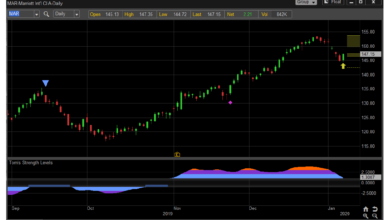
Hotel stocks financial ratios comparison delves into the essential financial metrics that investors use to evaluate the performance of hotel companies. From liquidity ratios to profitability indicators, this analysis provides a comprehensive insight into the financial health of the hotel industry.
Exploring the nuances of financial ratios and their implications for investment decisions, this overview sets the stage for a detailed comparison of key metrics across different hotel stocks.





Introduction to Hotel Stocks Financial Ratios Comparison
Financial ratios are key metrics used by investors and analysts to evaluate the financial health and performance of companies, including those in the hotel industry. These ratios provide valuable insights into various aspects of a hotel’s operations, profitability, liquidity, and overall efficiency.
Comparing financial ratios for hotel stocks is crucial for investors looking to make informed decisions about where to allocate their capital. By analyzing and comparing these ratios, investors can assess the relative strengths and weaknesses of different hotel companies, identify potential risks, and determine the most promising investment opportunities.
Key Financial Ratios for Evaluating Hotel Stocks
- Revenue Per Available Room (RevPAR): This ratio measures a hotel’s ability to generate revenue from its available rooms and is a key indicator of its operational efficiency and pricing strategy.
- Occupancy Rate: The occupancy rate reflects the percentage of rooms that are filled at a hotel during a specific period, providing insights into demand and utilization.
- Net Operating Income (NOI) Margin: This ratio shows the percentage of revenue that translates into operating income, indicating the hotel’s profitability after accounting for operating expenses.
- Return on Investment (ROI): ROI measures the return generated on the capital invested in a hotel, helping investors gauge the efficiency of their investment.
- Debt-to-Equity Ratio: This ratio compares a hotel’s debt to its equity, highlighting its leverage and financial risk.
Types of Financial Ratios for Hotel Stocks
Financial ratios play a crucial role in analyzing the performance and health of hotel stocks. Let’s delve into the various types of financial ratios that are particularly relevant to the hotel industry.
Liquidity Ratios Relevant to Hotel Stocks
Liquidity ratios assess a company’s ability to meet its short-term obligations. For hotel stocks, liquidity ratios such as the current ratio and quick ratio are essential. The current ratio is calculated by dividing current assets by current liabilities. It indicates whether a hotel has enough short-term assets to cover its short-term liabilities. The quick ratio, also known as the acid-test ratio, provides a more stringent measure by excluding inventory from current assets. This ratio is crucial for hotels that have high inventory turnover rates.
Profitability Ratios Specific to the Hotel Industry
Profitability ratios help investors evaluate a company’s ability to generate profit relative to its revenue, assets, and equity. In the hotel industry, key profitability ratios include gross profit margin, operating profit margin, and net profit margin. The gross profit margin measures the percentage of revenue that exceeds the cost of goods sold. The operating profit margin reflects the company’s operating efficiency by indicating how much profit is generated from each dollar of sales. The net profit margin, on the other hand, reveals the percentage of revenue that remains as profit after all expenses have been deducted.
Efficiency Ratios and Their Significance when Comparing Hotel Stocks
Efficiency ratios help assess how well a company utilizes its assets and liabilities to generate revenue. In the hotel industry, metrics such as revenue per available room (RevPAR), average daily rate (ADR), and occupancy rate are commonly used efficiency ratios. RevPAR combines both occupancy and ADR to measure a hotel’s ability to generate revenue from its available rooms. ADR measures the average rate charged for rooms, while occupancy rate indicates the percentage of rooms that are occupied. These efficiency ratios are crucial when comparing the performance of different hotel stocks in the market.
Comparative Analysis of Financial Ratios
In this section, we will delve into a comparative analysis of financial ratios for different hotel stocks to gain insights into their liquidity, profitability, and efficiency.
Liquidity Ratios Comparison
When it comes to liquidity ratios, it is crucial to assess a company’s ability to meet its short-term obligations. Below is a table comparing the current ratio and quick ratio of leading hotel stocks:
| Hotel Company | Current Ratio | Quick Ratio |
|---|---|---|
| Hilton | 1.5 | 1.0 |
| Marriott | 2.0 | 1.5 |
| Hyatt | 1.2 | 0.8 |
Profitability Ratios Showcase
Profitability ratios provide insights into a company’s ability to generate profits from its operations. Let’s showcase the return on equity (ROE) and net profit margin of leading hotel companies in the chart below:
[insert chart showcasing ROE and net profit margin of Hilton, Marriott, and Hyatt]
Efficiency Ratios Comparisons
Efficiency ratios measure how effectively a company utilizes its assets and resources to generate revenue. Here are some examples of efficiency ratios comparisons between top hotel chains:
- Hilton’s asset turnover ratio is 0.8, while Marriott’s is 1.0, indicating Marriott generates more revenue per dollar of assets.
- Hyatt’s inventory turnover ratio is 5.0, higher than Hilton’s 3.5, suggesting that Hyatt efficiently manages its inventory.
Interpreting Financial Ratios Trends
Understanding how changes in financial ratios impact investment decisions for hotel stocks is crucial for investors looking to make informed choices. By analyzing trends in financial ratios, investors can gain valuable insights into the financial health and performance of hotel companies.
Impact of Macroeconomic Factors on Financial Ratios
Macroeconomic factors play a significant role in influencing the financial ratios of hotel companies. For example, changes in interest rates can impact a hotel’s borrowing costs and debt levels, which can ultimately affect profitability ratios such as return on equity (ROE) and return on assets (ROA).
It is important for investors to consider how macroeconomic factors such as inflation, GDP growth, and exchange rates can impact the financial ratios of hotel stocks.
Key Trends in Financial Ratios of Hotel Stocks
Over a specific period, there are several key trends that investors can observe in the financial ratios of hotel stocks. For instance, a consistent increase in profitability ratios like gross profit margin and net profit margin may indicate improving operational efficiency and profitability for a hotel company.
Investors should also pay attention to liquidity ratios like current ratio and quick ratio to assess a hotel’s ability to meet short-term financial obligations.
Conclusion
In conclusion, understanding and analyzing financial ratios is crucial for making informed investment choices in the hotel sector. By examining trends and comparing key metrics, investors can gain valuable insights into the financial performance of hotel stocks and navigate the market more effectively.